
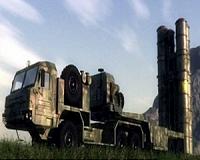
Russian President Vladimir Putin offered to sell Saudi Arabia its missile defence systems on Monday in the wake of the weekend attack on its oil facilities.
"We are ready to help Saudi Arabia so that she can protect her territory.
"She can do so in the same way that Iran has already done in buying the S-300 Russian missile system and the same way that Turkey has already done in buying the S-400 Russian missile system," Putin said at a press conference in Ankara, alongside the Turkish and Iranian leaders.
His comments come after the Kremlin warned against a hasty reaction to the strikes, which Washington has blamed on Iran.
But the attacks were initially claimed by Iran's Huthi rebel allies in Yemen, where a Saudi-led coalition is bogged down in a five-year war.
Speaking alongside Putin, Iranian President Hassan Rouhani said the attacks were an act of self-defence by Yemeni rebels.
"Yemen is the target of daily bombings… The people of Yemen have been forced to respond, they are only defending themselves," he said.
Huthi rebels threatened on Monday to carry out more strikes and urged foreigners to stay away.
On Monday, oil prices made their biggest jump since the Gulf War after President Donald Trump warned that the US was "locked and loaded" to respond to the attacks on the Saudi oil infrastructure.
NATO chief 'extremely concerned' after attacks on Saudi
Baghdad (AFP) Sept 16, 2019 –
NATO chief Jens Stoltenberg said Monday he was "extremely concerned" about escalating tensions following strikes on Saudi oil facilities at the weekend, accusing Iran of destabilising the region.
Speaking to AFP in Baghdad, Stoltenberg's comments were his first on the strikes on two major Saudi oil facilities, which were claimed by Yemen's Huthi rebels but which both Washington and Riyadh have blamed on Tehran.
"We call on all parties to prevent any such attacks occurring again because that can have negative consequences for the whole region, and we are also extremely concerned about a risk of escalation," the secretary general said.
Stoltenberg, who said the alliance "strongly condemned" the attacks because of the destabilising effect on oil supplies, also had a message for Iraq's neighbour, Iran.
"We are concerned about what we see, especially from Iran. Iran is supporting different terrorist groups and being responsible for destabilising the whole region," he charged.
The strikes on Abqaiq — the world's largest oil processing facility — and the Khurais oil field in eastern Saudi Arabia have roiled global energy markets and sent prices spiking.
Huthi rebels said they carried out the attacks with 10 drones, but American media have reported that US officials had satellite images showing the attacks — possibly with drones and cruise missiles — had come from the north or northwest, rather than Yemen.
The Saudi-led coalition on Monday said its preliminary probe had found Huthi rebels were not responsible, while squarely pointing the finger at Iran for providing the weapons used in the attacks.
It said it was still investigating where the strikes had originated.
Iraq, home to several Iran-backed paramilitary factions, has been placed in an awkward situation amid rising tensions between its two main allies, Iran and the US.
Baghdad has denied the attacks were launched from its country, with Prime Minister Adel Abdel Mahdi reiterating Iraq's aim to stay neutral in a call with US Secretary of State Mike Pompeo on Monday.
According to the premier's office, Pompeo told Abdel Mahdi that the US had also found that Iraqi territory was not used in the attacks.
The US has declined to comment directly.
