
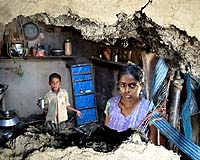
More rain and blocked roads have delayed efforts to help 300,000 people in southern Nepal hit by major flooding, amid fears of a rise in water-borne illnesses, officials said Tuesday. "We are concerned about water-borne diseases like diarrhea, dysentery and typhoid," Arjun Bahadur Singh, Nepal's health ministry spokesman, told AFP. "There is no shortage of medicine. However, accessibility is a problem: highways are blocked, there is no transportation and it is very hard for our medical response teams to get to some of the worst affected areas," he said.
Flooding and landslides have killed at least 93 people, mainly in the country's lowland south bordering India. Floodwater fed by monsoon rains and Himalayan snow melt displaced or marooned some 300,000 people.
The kingdom's home ministry said that continued rainfall was hindering relief efforts by the army, police and local and international aid agencies.
"There are still some areas receiving sporadic rainfall, and this is causing problems for our relief work," home ministry official Thir Bahadur G.C. told AFP.
Flooding has hit 33 of Nepal's 75 districts. Officials in the Himalayan kingdom have said dams built in India exacerbated the problem.
India in turn blames Nepal for its failure to control huge water flow from its rivers, which has inundated the northern states of Uttar Pradesh and Bihar.
Source: Agence France-Presse
