
Although the Russian Mikoyan-Gurevich MiG-29 Fulcrum air-superiority fighter with a vectored-thrust engine is currently stealing the limelight at the Dubai Air Show 2007, this warplane will become obsolete in the foreseeable future.
Fifth-generation fighters featuring entirely new engineering solutions will form the mainstay of national air forces in the 21st century.
On Nov. 15 Russia's Sukhoi Military Aviation Complex and the Indian Defense Ministry launched a new round of talks on developing a fifth-generation fighter.
On Oct. 18 Russian President Vladimir Putin told a televised news conference that Moscow would start developing such warplanes by 2015. Before that, Sergei Ivanov, first deputy prime minister and former defense minister, said a prototype fifth-generation fighter would perform its maiden flight in 2009 and that serial production would commence in early 2010. But most experts were not so optimistic and predicted that the first warplane in this category would not appear before 2012-2014, which is supported by Putin's statement.
However, the world's first fifth-generation fighter, the prototype U.S. F-22 Raptor fighter, first took off on Sept. 7, 1997. Two weeks later Russia's Sukhoi Su-47 Berkut, another prototype fifth-generation fighter, flew for the first time.
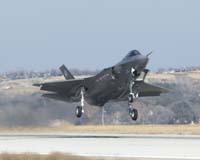
Production versions of the F-22 Raptor and the U.S.-EU Lockheed Martin F-35 Joint Strike Fighter are currently available. The latter, which is referred to as a generation five-plus fighter, seems to outperform the former.
Unfortunately, Russia has so far failed to master production of the purely experimental Su-47, built by Sukhoi at its own expense. Nevertheless, the plane's layout makes it possible to streamline various engineering solutions under the Advanced Tactical Aircraft — PAK FA — program.
The United States and Europe spent more than $20 billion on the F-35 JSF program. Therefore, experts believe that Russia should team up with a foreign partner in order to develop a fifth-generation fighter. It will take $600 million to $800 million to design the engine, the most expensive element, and another $1.5 billion to launch serial production.
Moscow considered China and India to be the best partners. However, Beijing prefers to develop its own aircraft engines, and India is more interested in state-of-the-art designing methods and does not want to manufacture "ready-made" planes.
Russia and India started negotiating on the joint fifth-generation fighter program in 2003. New Delhi insisted that the new plane be developed from scratch. Moscow was not very happy about this because it implied another highly expensive project.
Apart from outstanding achievements, bilateral military-technical cooperation has been marked by major setbacks and even conflicts. And this explains why it took India so long to get involved in the new fighter program.
(Next: The red tape problem)
(Yury Zaitsev is an academic adviser at the Russian Academy of Engineering Sciences. This article is reprinted by permission of RIA Novosti. The opinions expressed in this article are the author's and do not necessarily represent those of RIA Novosti.)
(United Press International's "Outside View" commentaries are written by outside contributors who specialize in a variety of important issues. The views expressed do not necessarily reflect those of United Press International. In the interests of creating an open forum, original submissions are invited.)
