
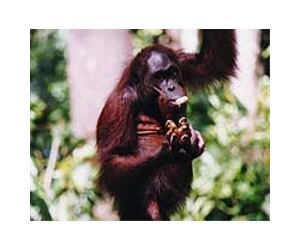
Malaysian wildlife activists said Sunday they have photographic evidence of the endangered orangutan using man-made treetop bridges to find new mates and prevent inbreeding.
Orangutan habitats in Malaysia and Indonesia have been devastated as jungles are cleared by logging companies and to make way for plantations, putting the ape at risk of inbreeding as they are split into smaller populations.
Activists in Malaysia's eastern Sabah state on Borneo island since 2003 began building bridges in a bid to save the species, which could be virtually eliminated from the wild within two decades if deforestation continues.
"Over the years we have received numerous local eyewitness reports of the orangutans using these rope bridges but this is the first time we have received photographic evidence," Isabelle Lackman from environmental group Hutan said.
She said a group of pictures captured by a local in February showed a young male ape crossed the single rope 20-metre bridge, one of the six built by activists, in the Lower Kinabatangan Sanctuary in Sabah.
Experts say there are about 50,000 to 60,000 orangutans — Asia's only great ape — left in the wild, 80 percent of them in Indonesia and the rest in Malaysian's eastern states of Sabah and Sarawak on Borneo.
Hutan said the evidence marked a success in efforts to conserve the population but called for the establishment of wildlife corridors that would enable the apes to move across the fragmented landscape and alongside rivers.
The group said using rope bridges is a "quick fix", while Sabah Wildlife Department head Laurentius Ambu said the permanent wildlife corridor will help save other species like Bornean Pygmy Elephants, sunbears and clouded leopards.
"Even though it will be an expensive and long process, reconnecting isolated populations which were originally linked together will ensure the long term survival of not only Sabah's orangutans but other unique species," he said.
Conservationists have warned the world has less than 20 years left to save the charismatic red-haired apes as they will become extinct if no action is taken to protect its jungle habitat.
Share This Article With Planet Earth
