
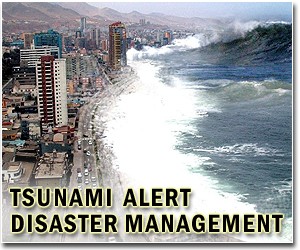
When Chile's massive earthquake sent a tsunami racing towards Japan at the weekend, 79-year-old grandmother Matsuko Shiba knew to head for high ground, and for good reason.
Half a century ago a killer wave from the South American country destroyed the picturesque fishing town of Minami Sanriku, taking 41 lives there and, she recounted sadly, probably killing the baby she was carrying inside her.
"Just the other day I was thinking, 'Oh, it's been 50 years since then'," Shiba said as she sat huddled with her grandchildren and elderly friends in an evacuation centre in the town, which was rebuilt after the tsunami.
"It may have been a premonition," she added.
This time, Japan was able to breathe a sigh of relief after the tsunami from half-way across the world defied authorities' most dire warnings and did little damage in Japan other than to inundate some port areas.
But Shiba and her friends, survivors of the calamity 50 years ago, agreed that the risk of an occasional false alarm is no reason to lose respect for the destructive fury of mother nature.
When they heard of Chile's 8.8-magnitude quake Saturday, they said dark memories quickly came flooding back of the other Chilean quake, in 1960, that sent a killer tsunami their way.
Sitting next to Shiba on a thin blanket, her 80-year-old friend Mrs Yoshida remembered that terrible day: "The water in the cove disappeared and then came rushing back, surging like a high tide.
"It's like a huge wall of water coming towards you to swallow up everything," said Yoshida, who shyly declined to give her first name.
The elderly survivors said the 1960 tsunami reached heights of up to five metres (16 feet) in their town, which now has a population of 17,800, and which sits at the foot of jagged mountains in northern Miyagi prefecture.
"One of my neighbours who ran with her three-year-old baby strapped to her back later realised that the child had fallen off and been swept away as they struggled in the water," Shiba said. "It was terrible."
"I was pregnant at the time and had to hang from the edge of a wooden roof when the water and debris gushed into my house," said Shiba, adding: "The baby died just one day after she was born."
Across Japan's Pacific coast the death toll from the 1960 quake — the strongest on record with a magnitude of 9.5 — reached 142.
When Japanese authorities on Sunday issued their first major tsunami alert in more than 15 years, warning of waves that could top three metres, the survivors from 1960 were the first to head for the local evacuation centre.
As the elderly banded together, remembering the tragic history of their town, some of the school children complained that they were bored and missed their television shows.
Yoshida's nine-year-old grandson, munching on crackers provided as emergency food, grumbled that he was tired, but added more cheerfully: "The only thing that is good today is that I get to eat a lot of snacks."
Yoshida, watching her carefree grandson, said that her town 50 years ago received a lot of help from people across Japan.
Today, she said, "we also need to help people suffering from disasters overseas. And, we, the elderly, need to talk more about what we experienced to the younger people."
Share This Article With Planet Earth
