
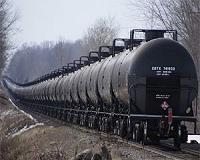
The U.S. Department of Transportation said it was frustrated that an energy industry group was on the sidelines of the debate over oil transportation by rail.
Suzanne Emmerling, a spokesperson for the department, said in a statement the administration was frustrated with statements made by the American Petroleum Institute on efforts to improve rail safety.
"It's disappointing that API continues to look for reasons not to engage in improving safety," she said in a statement Tuesday. "While the rail industry has taken many steps to improve safety, we will always demand more and expect more from them. We continue to hope the energy industry will join in those efforts."
API, which represents the business interests of the oil and gas sector, said its review of a federal report on rail found kinetic energy built up during a derailment may play a greater role than cargo in any detonations.
"The Department of Energy found no data showing correlation between crude oil properties and the likelihood or severity of a fire caused by a derailment," Robin Rorick, director of transit issues for the API, said in a statement.
The increase in U.S. crude oil production is more than the existing network of pipelines can handle, leaving the energy industry to rely on rail as an alternate shipping method. Federal data suggested some domestic grades of crude oil, such as the type extracted in North Dakota, may be more prone to detonation than others.
Several derailments, including the fatal Lac-Megantic disaster in 2013, involved trains carrying oil from North Dakota.
A report prepared for the Department of Energy by Sandia National Laboratories found the relationship between crude oil properties and the probability of combustion has not been established.
"Although it is likely that a combination of crude oil properties — especially those associated with potential for flammable vapor formation — could be used to predict combustibility, no specific, objective data were found that correlated known crude oil properties with the likelihood or severity of rail transport-related combustion events," the report read.
API said the report was an indication that a cross-sector approach was needed to address rail safety. Charles Drevna, president of the American Fuel and Petrochemical Manufacturers association, testified before Senate leaders last week that its members have invested more than $4 billion in safer rail cars in recent years.
