
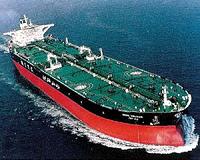
Danish shipping group Maersk Tankers on Thursday said it would cease its activities in Iran due to the US decision to leave a landmark nuclear deal and reimpose sanctions against Tehran.
Maersk Tankers would honour customer agreements entered into before May 8, but then wind them down by November 4, "as required by the reimposed US sanctions," the company told AFP.
The group said it "has been transporting cargoes for customers in and out of Iran on a limited basis," without providing precise figures for its activities.
A former subsidiary of the Danish maritime group AP Moller-Maersk, Maersk Tankers was in October 2017 sold for $1.17 billion to APMH Invest, a subsidiary of the investment A.P. Moller Holding.
The nuclear deal, reached in July 2015 between Iran and Germany, China, the United States under former president Barack Obama, France, Britain and Russia, called for Tehran to freeze its nuclear programme in exchange for getting some international sanctions against the Islamic Republic lifted.
Washington announced in early May that it would withdraw from the agreement and reimpose sanctions against Tehran.
"Iran's Military Budget is up more than 40 percent since the Obama negotiated Nuclear Deal was reached… just another indicator that it was all a big lie. But not anymore!" US President Donald Trump tweeted on May 13.
The French oil giant Total warned on Wednesday that it would pull out of a huge gas project in Iran, which started in July 2017, unless it would obtain a waiver from the US authorities with the support of France and the European Union.
Iran's oil exports amounted to one million barrels a day, mostly to Asia and some European countries, before sanctions were lifted. They have since climbed to 2.5 million barrels.
Maersk Tankers operates more than 160 vessels and employs 3,100 people worldwide for a turnover of $836 million in 2016.
EU to launch moves to block US sanctions on Iran Friday: Juncker
Sofia (AFP) May 17, 2018 –
The EU will on Friday begin moves to block the effect of US sanctions on Iran in the bloc, European Commission chief Jean-Claude Juncker said, as part of efforts to preserve the nuclear deal with Tehran.
"We will begin the 'blocking statute' process, which aims to neutralise the extraterritorial effects of US sanctions in the EU. We must do it and we will do it tomorrow morning at 10:30," Juncker said at a summit in Sofia on Thursday.
The European Union is trying to find ways to keep Iran in the 2015 accord by safeguarding the economic benefits Tehran gained in return for giving up its nuclear programme, after US President Donald Trump abruptly pulled out of the deal.
The "blocking statute" is a 1996 regulation originally created to get around Washington's trade embargo on Cuba.
It prohibits EU companies and courts from complying with specific foreign sanctions laws and says no foreign court judgments based on these laws have any effect in the EU.
But the row with the United States over the Cuba embargo was settled politically, so the effectiveness of the blocking regulation has never been put to the test.
Its value may lie more as a bargaining chip with Washington than its legal effectiveness, and last week an EU source acknowledged that the "political symbolic effect is potentially bigger than the economic effect".
