
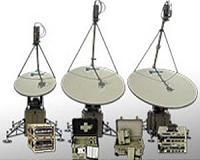
UHP Networks Inc, a leading manufacturer of innovative VSAT equipment, reports it has been selected to provide VSAT network solution to a major electrical utility company in the European Union. The high-availability network consists of two geographically redundant hubs and hundreds of remotes.
Smart grid technologies, including – among other elements – substation automation, supervisory control and data acquisition (SCADA) and energy management, rely on integrated communications systems.
VSAT networks have become a key part of such systems due to their ubiquitous coverage and resilience to natural disasters. One important goal of the network designer is to maximize network availability, while keeping the total cost of ownership under control.
The VSAT solution from UHP Networks achieves that goal owing to its unique design of geographically redundant hubs and its superior bandwidth efficiency. The industry-fastest switching time of redundant UHP Hubs has been proven in many deployments around the world.
The UHP technology also has a unique high efficiency of its TDMA protocol with only 4% overhead and adaptive coding and modulation (ACM). It has optimum performance in both high-throughput applications such as broadcast-quality video and in thin-route data services such as SCADA. In SCADA, UHP VSAT system can maximize efficiency by adapting the TDMA frame structure to the to the network traffic.
UHP Networks President and CEO Dr. Vagan Shakhgildian stated, " We are very pleased with this project win. It is our third project award in the important electrical utility sector in the last 6 months.
Not so long ago, highest availability in VSAT networks was considered impractical. UHP changed that due to our unique solution geographical hub redundancy. UHP network architecture is also known to be very cost-effective".
CDC Relies on Intelsat Network for African Field Offices
The U.S. Centers for Disease Control (CDC) has operations in more than 50 countries, but in recent years, Africa has emerged as a central area of focus following efforts to contain the West African Ebola virus epidemic that began in late 2013 and to prevent another outbreak.
The agency has 14 field offices in 13 African countries, and all are connected to the global communications network … read more
