
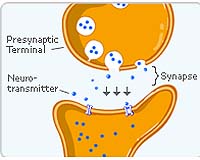
U.S. medical researchers say they've identified a molecule that plays a key role in the formation of brain synapses.
The Stanford University Medical Center scientists said their discovery, based on experiments in cell culture and in mice, could advance science's understanding of how children's brains develop, as well as point to new approaches toward countering brain disorders in adults.
The researchers said their study also, for the first time, identifies the biochemical mechanism by which the widely prescribed drug gabapentin (Neurontin) works.
"We have solved the longstanding mystery of how this blockbuster drug acts," said Dr. Ben Barres, a professor of neurobiology, who led the study. He said the findings shows gabapentin halts the formation of new synapses, possibly explaining its therapeutic value in mitigating epileptic seizures and chronic pain.
The research is reported in the early online edition of the journal Cell.
Share This Article With Planet Earth
