
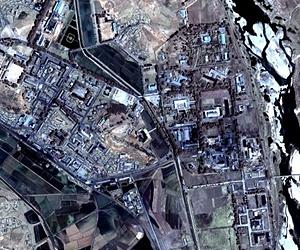
North Korea is making progress on a project that it says is a light water reactor but has raised overseas concerns, a US think tank said Wednesday after obtaining satellite images.
The Institute for Science and International Security released images that showed activity at Yongbyon near the site of a former cooling tower, which the North destroyed in 2008 to showcase its commitment to denuclearization.
The images, which were taken commercially on March 8, showed a crane and what appeared to be construction material along with a 21-meter (69-foot) cylinder whose exact use was unclear.
South Korea's KBS television earlier obtained pictures that showed progress on the site and what some Seoul media said might be new nuclear facility. The US think-tank said its images, taken several weeks earlier, did not show the structure.
North Korean officials last year told US scholar Jack Pritchard that they planned to build an experimental light-water reactor at Yongbyon, which is around 100 kilometers (60 miles) north of the capital Pyongyang.
Yongbyon already has an aging reactor that produced plutonium for North Korea's nuclear weapons. Light-water reactors are generally used to generate electricity.
However, the North Korean plans have raised concerns that the regime may also be making new efforts to build nuclear weapons or that it is boasting of its atomic prowess to strengthen its hand diplomatically.
Some foreign experts also questioned the safety of nuclear power in impoverished North Korea in light of the crisis at the Fukushima plant in much more developed Japan.
Six-nation talks on ending North Korea's nuclear program have been at a standstill since 2009, with US President Barack Obama's administration demanding concrete commitments by Pyongyang before it resumes talks.
But former US president Jimmy Carter, an advocate of engagement with the regime, is leading a delegation of elder statesmen to Pyongyang this week. He wrote on a blog post that North Korea wants better ties with Washington.
Share This Article With Planet Earth
