
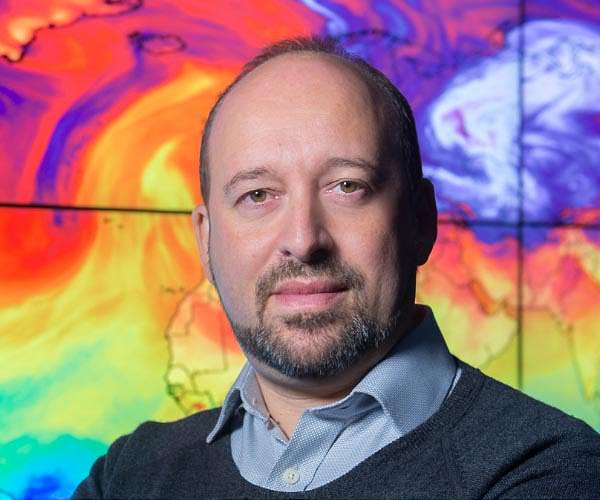
In an effort to ensure effective fulfillment of the Biden Administration's climate science objectives for NASA, the agency has established a new position of senior climate advisor and selected Gavin Schmidt, director of NASA's Goddard Institute for Space Studies in New York, to serve in the role in an acting capacity until a permanent appointment is made.
"This position will provide NASA leadership critical insights and recommendations for the agency's full spectrum of science, technology, and infrastructure programs related to climate," said acting NASA Administrator Steve Jurczyk. "This will enable the agency to more effectively align our efforts to help meet the administration's goals for addressing climate change."
Climate adaptation and mitigation efforts cannot succeed without robust climate observations and research. With more than two dozen satellites and instruments observing key climate indicators, NASA is the premier agency in observing and understanding changes to the Earth. Furthermore, NASA enjoys broad public support and trust, lending credibility to its climate observations.
"The complexities of climate processes still are not fully understood, and climate adaptation and mitigation efforts cannot succeed without robust climate observations, data, and research" said acting NASA Chief of Staff Bhavya Lal.
"The appointment of Gavin Schmidt will help ensure that the Biden Administration has the crucial data to implement and track its plan toward the path to achieve net-zero emissions economy-wide by 2050, and a healthier, safer, more prosperous planet for our children."
As a representative of the agency's strategic science objectives and accomplishments, the senior climate advisor will advocate for NASA climate investments in the context of broader government agendas and work closely with the White House Office of Science and Technology Policy and the Office of Management and Budget.
Specifically, the senior climate advisor will work to:
+ Promote and engage in climate-related investments in the Science Mission Directorate's Earth Science Division.
+ Promote aeronautics and other technology initiatives focused on reducing carbon dioxide emissions and broad climate impacts.
+ Demonstrate and communicate the societal impacts and breadth of NASA investments related to climate.
+ Foster communication and coordination within and outside the science community at NASA.
+ Actively engage in amplifying the agency's climate-related research and technological development.
