
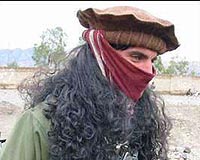
The believed killing of Baitullah Mehsud in a US drone attack points to closer cooperation between Pakistan and the United States in the covert war against Taliban and Al-Qaeda suspects, analysts say.
Mehsud's purported death last Wednesday when a US drone fired two missiles into his father-in-law's home in remote South Waziristan would mark the biggest success of the covert CIA war against militants in Pakistan's tribal belt.
Although the United States refuses to confirm individual attacks, US officials say air strikes are effectively eliminating militants they accuse of plotting terror attacks on the West and the region from inaccessible mountains.
US national security adviser Jim Jones welcomed the reported killing as "a big deal" which he told NBC News meant US efforts to forge closer security ties with the Pakistani military were "moving in the right direction".
Last May, the director of the Central Intelligence Agency Leon Panetta said unmanned aircraft had been "very effective" in targeting the leadership of Al-Qaeda, believed to be hiding in Pakistan's border regions with Afghanistan.
Despite more than 50 such attacks over the last year, Pakistan recently noted a US shift of attention towards Mehsud, having complained that US spies targeted those considered a threat to US troops fighting in Afghanistan.
"The US and Pakistan say they have a common enemy and a common fight," said Ishtiaq Ahmed, international relations professor at Quaid-i-Azam University.
"If the intelligence for striking Mehsud was provided by Pakistan, then we are seeing a different level of cooperation between the two countries.
"The Pakistani public should now say 'thank you America', because it has eliminated the greatest threat to Pakistan," Ahmed added.
Pakistan has in the past vociferously opposed drone attacks as a threat to sovereignty which risk whipping up a spiralling anti-American backlash that could destabilise the weak civilian government.
But if a US missile killed Mehsud — blamed for the death of ex-premier Benazir Bhutto, hundreds of others and for cosying up to Al-Qaeda — Islamabad will have less room to object and US attacks will increase, analysts said.
"Elimination of Baitullah Mehsud has widened the space for drones to operate in Pakistani tribal areas," said Ahmed.
Huge public opposition to Taliban encroachments into territory under direct government control last April and the wide support for Pakistan's offensive to push them back have also changed the dynamic.
Analysts say the US decision to target Mehsud has given a shot in the arm to Islamabad's battle against Islamist footsoldiers in western Pakistan, who are now deemed a domestic threat instead of a counter-balance to rival India.
"The US will be able to strike more now saying it is effective and Pakistan will have no justification to oppose these attacks," Pakistani tribal affairs expert, Rahimullah Yusufzai, told AFP.
"The killing of a key Pakistani enemy by the US will improve public opinion and create a soft corner for the United States in Pakistan," Yusufzai said.
But pressure will also mount on Pakistan to take advantage of the US drone attacks to step up its fight against Islamist militants and assert more control over the wild, semi-autonomous terrain.
"The death of Mehsud has opened up a window of opportunity for Pakistan, but it is limited in time and should not be wasted. Pakistan must establish its sovereignty or writ in tribal areas as soon as possible," said Ahmed.
Mehsud's Tehreek-e-Taliban Pakistan (TTP) movement appears to have been thrown in turmoil following Mehsud's believed death and reports have widely circulated of a deadly shootout between the camps of different contenders.
"The United States launched eight or nine drone attacks in recent months, targeting Mehsud's area. They did help Pakistan," said analyst Hasan Askari.
Share This Article With Planet Earth
