
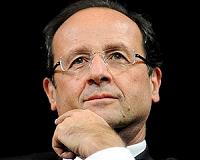
French President Francois Hollande on Thursday urged the world's nations to make history in Paris next year by signing a globally binding climate pact he hopes to leave as his government's legacy.
The French capital is hosting a UN conference in December 2015 that aims for the first time to seal a binding universal agreement on cuts in greenhouse-gas emissions in a bid to limit global warming to two degrees Celsius.
"I have been asked when I became an environmentalist," Hollande told a conference in Paris Thursday, adding the answer was "when I arrived in power."
"Because, at some point you have to leave your mark, and the mark we will leave together is a historic climate agreement, and, I hope, excellence in terms of energy transition."
A recent report by the Intergovernmental Panel on Climate Change (IPCC) warned time was running out to curb global warming as current levels of greenhouse gases meant the Earth was likely to see at least 4 C warming by 2100.
This would mean worsening droughts, floods, rising seas, species extinctions and humans scrambling for food and precious resources.
"We have a duty to succeed," said Hollande, referring to next year's summit, to be preceded by climate talks in Lima next month.
Climate negotiations have been hung up for years over which countries should shoulder the cost for reducing carbon emissions, derived from the world's cornerstone energy sources today.
Poor nations, already bearing the brunt of climate induced changes such as drought and flooding, argue that rich, industrialised nations must take greater responsibility given their longer history of emissions.
Rich countries, in turn, point the finger to countries like India and China, which are now among the major emitters since coal powers their economic development.
Meanwhile Hollande addressed environment concerns at home, after weeks of protests over the death of a young eco-activist during a demonstration against a controversial dam project.
Remi Fraisse, 21, last month became the first person to die in a protest in mainland France in two decades, when activists against the project in the southwestern region of Tarn clashed violently with security forces.
Investigations suggest he may have been killed by a police concussion grenade.
Hollande said his government would propose the holding of local referendums to decide on similar projects in the future.
"Everything must be done so that on every large project, all points of view are considered, that all alternatives are presented."
