
France said Friday that it "needs no permission" to work towards easing tensions between Iran and the US, after President Donald Trump accused his French counterpart Emmanuel Macron of meddling in the dispute.
"On Iran, France speaks with complete sovereignty. It is working hard for peace and security in the region, it is working to facilitate a de-escalation in tensions and it needs no permission to do so," Foreign Minister Jean-Yves Le Drian said in a statement.
In a tweet Thursday, Trump claimed that Iranian officials want "desperately to talk to the US, but are given mixed signals from all of those purporting to represent us, including President Macron of France."
"I know Emmanuel means well, as do all others, but nobody speaks for the United States but the United States itself. No one is authorized in any way, shape, or form, to represent us!" he said.
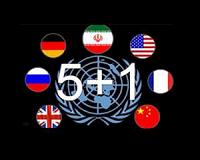
Trump has reimposed crippling sanctions on Iran after pulling out of an international deal aimed at curbing the country's nuclear ambitions.
But the European partners to the accord, including France, have resisted his attempts to isolate the Iranians.
Le Drian said the worsening tensions between Tehran and Washington, which have been blamed for attacks on oil tankers in the Gulf and downings of drones, called for initiatives to try to restore dialogue.
"That's what President Macron is doing, in full transparency with our partners, above all our European partners," he said, adding that Macron was "obviously keeping American authorities informed".
On Tuesday, the Al-Monitor news site reported that Macron, who speaks regularly by telephone with Iranian President Hassan Rouhani, had invited Rouhani to attend the G7 summit in France on August 24-26 to meet with Trump.
The report, which cited two unidentified sources, said Rouhani had declined to attend or send a representative.
The French presidency has denied the report, saying Macron never put forward any such proposal.
After a call with Rouhani on Tuesday, the French leader, who has attempted to mediate in several disputes in North Africa and the Middle East, said it was France's role "to make every effort to ensure that all parties agree to a break and open negotiations."
The dispute with Iran is expected to be a major issue at the G7 summit in the southwestern city of Biarritz.
Paris has engaged in intense diplomacy to try to resolve the tensions, with Macron's foreign policy advisor Emmanuel Bonne twice visiting Tehran.
Russian President Vladimir Putin is scheduled to visit Macron at his holiday retreat on France's Mediterranean coast on August 19 to discuss the Iranian situation, ahead of the G7 meeting.
Trump criticizes French president for sending Iran 'mixed signals'
Washington (AFP) Aug 8, 2019 –
President Donald Trump on Thursday accused his French counterpart Emmanuel Macron of getting in the way of US policy and sending "mixed signals" to Iran.
"Iran is in serious financial trouble. They want desperately to talk to the U.S., but are given mixed signals from all of those purporting to represent us, including President Macron of France," Trump tweeted.
Trump has imposed crippling sanctions on Iran and sought to sink an international deal for managing the country's contested nuclear industry, but several major allies and other partners, including France, have resisted the US attempt to isolate the Iranians.
That division over how to handle Iran appears to be frustrating Trump, who is now left with few options other than to keep adding US pressure on Tehran — so far with little tangible benefit.
Trump lashed out at Macron, saying "I know Emmanuel means well, as do all others, but nobody speaks for the United States but the United States itself. No one is authorized in any way, shape, or form, to represent us!"
As the US-Iranian standoff deepens, tensions are soaring in the strategic region, with drones downed, tankers seized by Tehran and mysterious attacks on ships in Gulf waters.
Washington and its Gulf allies have accused the Islamic republic of the attacks on ships, which Tehran denies.
In response, the US has been seeking to form a coalition whose mission– dubbed Operation Sentinel — it says is to guarantee freedom of navigation in the Gulf.
Britain, which already has warships on protection duty in the Gulf after a UK-flagged tanker was seized by Iranian Revolutionary Guards, has said it will join the planned operation.
But other European countries have kept out, for fear it might harm European efforts to reach a negotiated settlement with Iran.
