
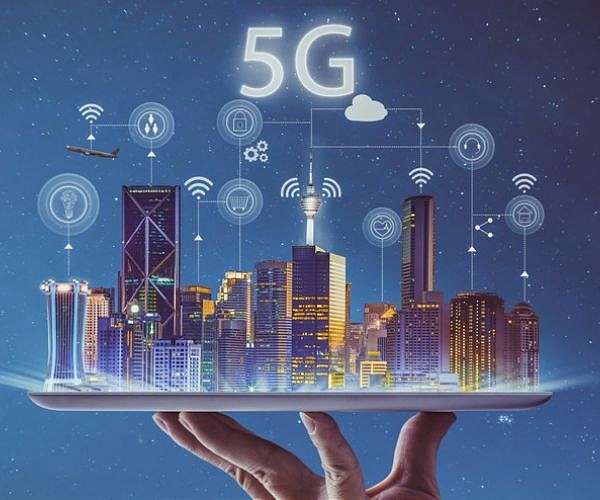
Have you ever dreamed of a connection exceeding any previous network standards and promising even more technological advancements?
5G technology is the fifth-generation mobile network standard and the foundation for a global high-tech revolution. In this article, you will learn everything you need to know about the future of connectivity.
How 5G Technology Works
The ultra-new network version offers more speed and efficiency than ever before. Compared to 4G networks, 5G increased the speed from 1 to 10 Gbps while also reducing latency to only 1 millisecond. Such high-speed qualities are crucial for placing life-changing bets on 1xBet or powering AI tools.
One key innovation to consider in this revolutionary technology is its use of a wider spectrum of mmWave frequencies. These frequencies range from 24-100 GHz and allow for faster transmission overall.
Network slicing is another novel concept that comes with 5G. Now, every physical infrastructure will be divided into multiple virtual networks, allowing various industries to benefit from top connectivity.
All of these promising 5G properties are achieved through several methods:
Feature
Description
Massive MIMO
Based on a large number of antennas for signal boost.
Beamforming
Signals are directed to selected users for improved efficiency.
Edge Computing
Data is processed closer to the source.
Key Benefits of 5G Technology
Besides its revolutionary high-tech aspects, 5G promises a range of practical benefits with various applications.
> Faster Internet
Internet speed will reach up to 10 Gbps, meaning instant downloads and online stability.
> Ultra-Low Latency
Especially useful for online gaming and real-time applications, latency is reduced to 1 millisecond.
> Higher Device Connectivity
The network can connect up to a million devices per square kilometer, a key element for smart houses and wearable devices.
> Improved Network Efficiency
Even densely packed areas will support stable connectivity due to improved bandwidth management.
> Enhanced Streaming and Computing
Seamless 4K and 8K videos are anticipated, as well as improved streaming opportunities with minimized latency.
5G vs. Previous Generations (3G, 4G, LTE)
The importance and relevance of 5G become even more evident when compared to its predecessors.
Speed Comparison
Many modern-day tasks rely on a speedy internet connection. Thankfully, 5G has it under control, especially compared to previous challenges.
Generation
Speed
3G
2 Mbps
4G
100 Mbps – 1 Gbps
5G
1 – 10 Gbps
Latency Revolution
Moreover, the time needed to download or transfer data has also been significantly altered. Now, millions of daily routine activities can be reduced to a few seconds instead of minutes or hours.
Generation
Latency
3G
100 ms
4G
50 ms
5G
<1 ms
Network Capacity
Ultimately, the number of devices operating from a single source has increased to millions per square kilometer. This opens a whole new chapter for smart houses and other advanced technologies.
Generation
Capacity
3G
Up to 100,000
4G
Up to 1 million
5G
1 – 10 million
Applications of 5G in Different Industries
Most importantly, the unlimited applications of 5G must be considered as well. Due to the innovative science behind it, 5G can transform nearly every industry globally.
Industry
Application
Smart Cities
Traffic management, infrastructure monitoring, real-time utilities.
Healthcare
Remote surgeries and telemedicine opportunities.
Automotive
Vehicle-to-everything communication with self-driving cars.
Entertainment and Gaming
Cloud gaming platforms with superb gaming tools.
Manufacturing
Factories actively using AI-driven mechanisms.
Finance and Banking
Faster transactions, anti-fraud technologies, and increased security.
Challenges and Concerns About 5G Technology
While the general idea of 5G implementation is widely appreciated, we must also take into account the potential challenges involved.
#1 Infrastructure Requirements
Small cell towers and other minor yet essential infrastructure elements will have to be implemented as soon as possible. This means additional high costs and investment paperwork.
#2 Security Risks
As with any tech-related issue, cyberattacks are a serious potential threat. The problem must be regarded as soon as the network standard is made available everywhere.
#3 Myths
Some potential users have expressed concern about 5G radiation health hazards. However, such myths have yet to be proven scientifically since the 5G frequencies are within safety limits.
#4 Device Compatibility
Devices might have to be rearranged to protect their battery life from the ultra-efficiency of a 5G connection. For example, chipset technologies might have to be implemented in all new devices.
The Future of 5G and Beyond (6G and Beyond)
Is 5G the limit, or should we be expecting more network generations in the near future?
Once the mentioned infrastructure and security issues are resolved, more innovative approaches to speedy connections can be discussed. In that way, a wider spectrum usage and lower energy consumption are the next steps in the technological revolution.
So, as the tech world is changing for the better, we can slowly start to adapt to the new reality.
Conclusion
5G is slowly but surely transforming the world and multiplying every user's range of digital opportunities by tenfold. As we continue following the revolutionary path set by the 5G standard, we can welcome improved connectivity, faster transactions, and intelligent cities.
